
Welcome to God’s Garden – Kitulo National Park
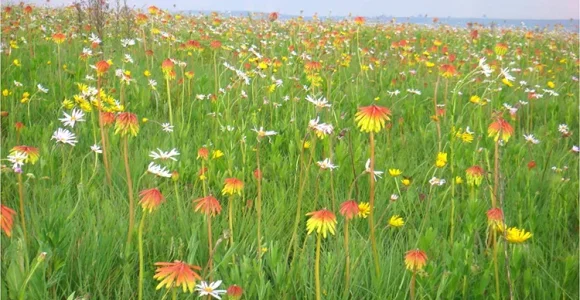
A wilderness worth exploring! The montane grassland and the Kitulo Plateau make this area a stunning place to visit. The lovely view of the plains with some flowers which are the most beautiful creations of the ALMIGHTY, created to spread smiles to mankind through their sweet smell and attractive appearance, including the birds, makes this place stay in someone’s heart forever. Vast rolling plains and grassland, butterflies, birds, plants and incredible views will also make your stay unforgettable. The meagre natural life in the park comprises the hypnotising plants, delightful birds and beautiful butterflies.
Brief History of the Park
The park’s history goes back to 1870, when Frederick Elton, an explorer, visited the area. In the 1960s, a large area was taken by the United Nations Food and Agriculture Organisation for the Wheat and Sheep Schemes. Since neither wheat nor sheep thrived in the region, in 1972 the area was turned into a dairy farm, which remains active. As a result of concerns from conservation bodies and various stakeholders, part of the farm, Livingstone and Nhumbe Forest Reserves, was declared Kitulo National Park on 16th September 2005 by government notice 279. Kitulo covers an area of 465.9 sq km and is a botanist’s fantasy with more than 350 types of vascular plants, including 45 terrestrial orchids. Local people allude to “Bustani ya Mungu”, which signifies “God’s garden” in Swahili.
Best Time to Visit Kitulo National Park
Wildflower Season (December to April)
The wet season from December to April is ideal if you’re drawn to vibrant floral displays. During this period, the park, often called the “Serengeti of Flowers,” bursts into colour with over 350 plant species, including more than 45 varieties of orchids, blooming across its montane grasslands. This season also attracts migratory birds, making it a prime time for birdwatching. However, be prepared for cooler temperatures, ranging from 7°C to 18°C, and occasional rainfall, which can make some trails challenging to navigate.
Dry Season (May to October)
For those interested in hiking and wildlife viewing, the dry season from May to October offers clear skies and temperate weather. This period is ideal for exploring the park’s trails and observing animals congregating around water sources. However, note that from May to August, the park’s mountains and plains are often shrouded in mist and cloud, reducing visibility.
How to get there
The park can be accessed from Mbeya town, about 110 Km away via Chimala road and 70 Km via Isyonje road. It is about 90 Km from Songwe Airport. The park can only be reached by road.
By Air: Through Songwe Airport, 90 km via Isyonje and 125 km via Chimala, a small town to Kitulo.
By Road: Mbeya city-Isyonje- Kitulo is 70 kms: Mbeya city-Chimala-Kitulo is 103 kms: Njombe town-Ikonda-makete-Kitulo is 165 kms.
By Railway: Through railway transport Tanzania-Zambia (TAZARA), Iyunga and Makambako stations.
Songwe Airport is an airport in the southern highlands region of Tanzania serving the city of Mbeya and the nearby areas. It can accommodate commercial jet traffic. Air Tanzania, Precision Air, and Tropical Air provide domestic flight services.
Best Attractions in Kitulo National Park
Kitulo Plateau
The plateau is characterised by three main vegetation types, including: well-drained grassland on volcanic soils with species like Aster transaniesis, Kniphofia Grantii and others, seasonally or permanently in undated bogs with species such as Lobelia and Gladiolus. Rocky ridges and associated talus slopes on soil are also derived from metamorphic rocks with species like Moraea callista and Romulea companuloides.

Flowers
Flowers
The park is one of the incredible flower gardens of the world, with over 40 species of ground orchids alone. Flowers come out in their thousands, making an unparalleled carpet of colour, especially from late November to April.
Physical Features and Vegetation
Kitulo National Park is floristically rich with at least 350 species of vascular plants documented so far from the plateau. Kitulo highlands appear to be significant geographical grounds for species typical of the Eastern and Southern Africa region. They are extremely rich in endemic and rare species that are not protected elsewhere in Tanzania.
Mount Livingstone Forest
Some of the tree species in the forest are Hagenia abyssinica, Ocotea usambarensis, Juniperus procera, and Khaya anthoceca. The forest is also characterised by mountain Bamboo (Sinarundinaria alpina). Kitulo is rich in flora species with 350 species of high plants recorded, including 45 species of terrestrial Orchids, of which 31 species are endemic to Tanzania, 16 are endemic to Kitulo and Poroto Mountain, and at least three species are endemic to Kitulo National Park. Two species are only known to be in Kitulo and the adjoining forest. The abundance of plants in the wet season has been described as the greatest flora marvel of the World.
Nhumbe Valley
This is often referred to as the jewel of the Park, where small streams emerge from the grassy hill sides, sometimes cascading down in little waterfalls, thus forming the headwater for the Nhumbe River, one of the main tributaries of the Great Ruaha River. A Juniper forest occupies the gap of the valley, one of the most extensive in East Africa. They tower to 50 m high and are the tallest junipers in the world.
Nhumbe Waterfall
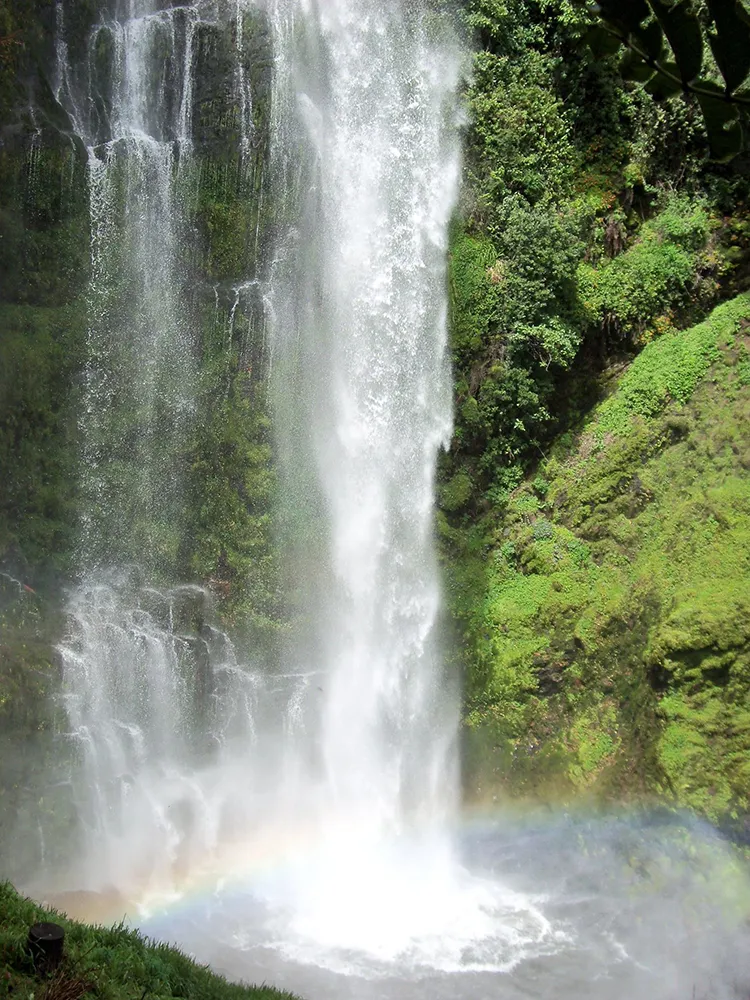
Its height is approximately 100 meters. The waterfall is 20 km from Mwakipembo main gate and takes one hour to walk down the waterfall and up to the picnic site. You can cool your body there and take brilliant photos.
Mwakipembo Waterfall
It is located along the road to Nhumbe valley, 4 km from Mwakipembo main gate, and its height is 8 meters. Orchid, everlasting, Erica, and Clematis uhehensis characterise the area.
Kitulo National Park Wildlife
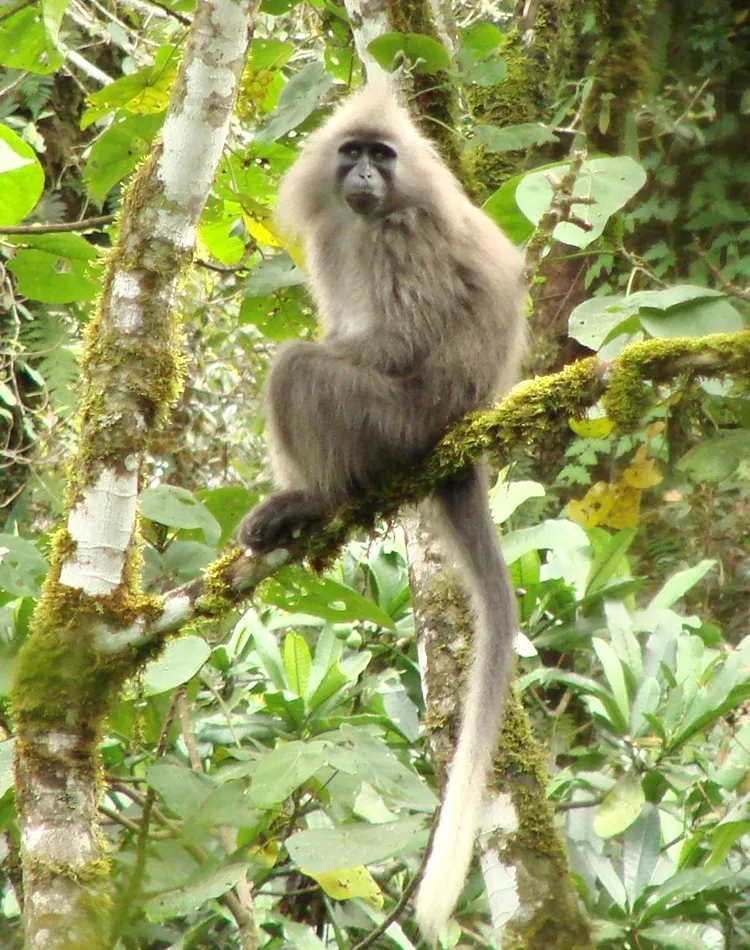
Africa’s first new monkey species for over 20 years has been discovered in remote mountains in southern Tanzania. (Rungwecebus Kipunji), This long-forested primate was first discovered by a conservation biologist from the Wildlife Conservation Society (WCS) on the 2961 m (10,000 ft) Mt. Rungwe and Kitulo National Park flanks. Other wildlife animals are Bush duiker, Klipspringer, Abbots duiker, Mountain Reedbuck, Bushbuck, Rungwe Galago, Zebras, Black and white colobus monkeys and Impalas.
Cultural Attractions
Mlivili cave is located along Matamba Ridge after Mwakipembo water fall, and Usalama cave is about 8 kilometres from Common Works Junction, the road to Mbeya via Isyonje. During intertribal war, indigenous people from Wawanji, Wakinga and Nyakyusa from Mwakaleli used the caves as a hiding point. Nowadays, these areas are used as poachers’ hides.
Birds
Kitulo National Park is an important bird area (IBA) with a wintering site for various bird species from South Africa and Europe. Some species from North Africa, especially Abdim’s stock, use Kitulo as a wintering area. The plateau is also a home of breeding colonies of the Blue swallow and Denham’s bustard. Other endemic bird species include: Lesser kestrel, Pallid Harrier, Cisticola njombe, Kipengere Seedeater and Uhehe fiscal. Many waterbirds can be found at Dhambwe Crater Lake. These are: Yellow billed-duck, White-faced whistling ducks, Common teal, Open-billed stocks and Red knobbed coot.
Dhambwe lake
A small volcanic lake is in the park. The lake can be accessed by a 3 km walking trail from the Kimodo-Kikondo road in the park. On the trail, the astonishing bamboo forest can be witnessed, and upon reaching the lake, different water birds such as the common teal can be spotted.
Mtorwi peak
It is located on the park’s eastern side with an altitude of 2961 m.a.s.l. The peak can be accessed from the Nhumbe valley on an ascending natural trail. Hiking can be done to reach the peak, and unique floral features can be observed on the way up.
Tourism Activities
Hiking and Nature Walking Safaris
The park is a hikers’ paradise with vast attractions on foot, like the Matamba ridge, numerous waterfalls, and Mtorwi peak (2961 M). Experience the beautiful wild flowers up close and personally.
Please take one of the many walking trails that we have customised so that you can explore the park and nature along Nhumbe forest with suitable habitat for over 50-meter trees, black and white colobus monkey, and waterfalls. On Mount Livingstone ranges and grassland plain, there are fascinating trails for flowers, hikers and forest lovers.
- Nhumbe walking trail (1 – 3hrs)
- Matamba ridge ( 4 – 10hrs walk)
- Kipunji hiking trail takes (8 -12hrs)
- Kilasi hiking trail takes (3 – 6hrs)
- Bamboo hiking trail takes (3 – 6hrs)
- The Ikubo hiking trail takes (3 – 6hrs)
Also, a Trail from Ipelele to Matema Beach- Lake Nyasa takes you a couple of days.
Game viewing
Explore a game drive along Matamba Ridge, Montane grassland, bamboo forest, Mt.Livingstone, trees, waterfalls, and a natural flower garden. Four-wheel (4×4) drive vehicles are recommended.
Bird watching
Learn more about the bird species that are endemic to Kitulo and migratory birds from South Africa and Europe. Bird watching is done on Lake Dhambwe, the grassland plain, and the Nhumbe Valley. The best time to see the birds is early morning and evening.
Camping
Explore camping in the nature garden, and flowers are another experience. Mwakipembo Public Campsite with flash toilet, shades and fireplace. Maua Special campsite is in a natural environment that is reserved to maintain exclusivity for users.
Cycling
Grab your bicycle and head out to the park, connecting various attractions in a network. There are two different park connector loops for our visitors. The 22km route starts from Mwakipembo entrance gate and passes through Nguzo Mbili, Uwanda picnic site, Mlivili cave, Mwakipembo waterfall and back to Mwakipembo gate.
Enjoying Wild Flowers
Wildflowers are most peculiar at the park during the rainy season from November
Accomodations in Kitulo National Park
The park provides a variety of accommodations, which can be found inside and outside the park.
Inside the park
The park has cottage rooms with a Shower, w/c and a double or single bed inside the park area; prior booking is advised. One public campsite is available, Mwakipembo campsite, which has a shower block and toilets, an indoor dining area, and an outdoor fireplace area.
Outside the park
Guest houses and lodges available in Matamba, a small town (Mtanganyika lodge, Ngogo lodge, Kitulo gods garden, Eden motel, Utengule coffee Farm Lodge, New modern Mbeya hotel, Mdope hotel, Hill view at Mbeya city.
How to Plan Your Safari in Kitulo National Park
Planning a safari to Kitulo National Park can be a unique and fulfilling experience, especially if you are a nature lover, hiking enthusiast, or flower and birdwatching admirer. Here’s a step-by-step guide to help you organise a smooth trip:
- Choose the Right Season
- For flowers and birdwatching: Visit between December and April during the wet season when the park blooms with orchids and migratory birds.
- For hiking and photography: Plan your trip during the dry season (May to October) for clearer skies and better trail conditions.
- Decide on Transport
- By Air: Fly into Songwe Airport, about 90 km from the park. Domestic flights are available via Air Tanzania, Precision Air, and FastJet.
- By Road: Access the park from Mbeya (70 km via Isyonje or 103 km via Chimala) or Njombe (165 km).
- By Rail: TAZARA railway stops at Iyunga and Makambako, which can connect you by road to the park.
- Choose Accommodation
- Inside the Park: Stay at the park cottages or Mwakipembo campsite.
- Outside the Park: Options include Kitulo God’s Garden Lodge, Eden Motel, and Ngogo Lodge in Matamba town. You can also stay in Mbeya City for more upscale lodges like Utengule Coffee Farm Lodge or New Modern Mbeya Hotel.
- Select Your Activities
- Plan your itinerary based on interest:
- Hiking: Try trails like Matamba Ridge (4–10 hrs) or Mtorwi Peak (2961 m).
- Bird Watching: Visit Lake Dhambwe and Nhumbe Valley early in the morning or evening.
- Game Drives: Ideal along montane grasslands and bamboo forests.
- Cultural Tours: Visit Mlivili and Usalama caves.
- Cycling: Follow the 22km loop trail for a scenic ride.
- Pack Accordingly
- Warm clothes (it can be very cold and misty)
- Hiking boots
- Binoculars and a camera
- Rain gear (if visiting in the wet season)
- Sunscreen and insect repellent
Let Us Help You Plan the Perfect Trip!
At Kanuth Adventure Safaris, we specialise in crafting custom itineraries that make the most of your visit to Kitulo and the southern highlands. Whether you’re looking for a peaceful nature walk among blooming orchids or an adventurous hike to a scenic waterfall, we’ve got you covered.
We offer:
- Private transport from Dar es Salaam, Iringa, Mbeya or Njombe
- Professional guides with local knowledge
- Customised safari packages (day trips or multi-day)
- Accommodation booking assistance
- Cultural and eco-tourism extensions
Contact Kanuth Adventure Safaris today at +255 754 967 544 and let us turn your dream safari into reality!


